

Make colored-dyed rainbow rice at home in 5 easy steps to use in sensory play or as a filler in a sensory bin to promote fine motor skills and refine tactile and visual senses in preschoolers and kindergartners.
If you are looking for a cheap and easy way to entertain your kids that doesn’t involve a screen, look no further! This Rainbow Dyed Rice Sensory Bin is a perfect sensory activity that will keep little ones occupied for hours! Besides, making this colorful creation will be the best time to spend because it lasts forever, and thus, the fun never stops. It’s the ultimate sensory filler and also perfect for little ones who are not fans of anything with messy/slimy/smooshy textures. Most importantly, dyed rice is an excellent tool to promote sensory play. Check out the plethora of extensions and activities you can use the dyed rice with below.
Join Monthly Kids Activities Plan Membership
Although parenting doesn’t come with a user manual, your homeschooling can! Spend less time searching and more time doing because you’ve got a Plan – The Monthly Kids Activities Plan! So, grab my time-proven roadmap and fast-track your way to homeschooling success so that your child reaches their fullest potential!

Looking for a fun way to engage your child in sensory play? Try this easy method to make your own rainbow dyed rice sensory bin! It’s one of the easiest ways to introduce sensory experiences to young children while stimulating their senses through bright colors and imaginative play.
How to Make Rainbow Dyed Rice Sensory Bin
Start by adding cups of rice into a ziplock bag (or Ziploc bag), and then pour in a teaspoon of vinegar or a tablespoon of vinegar, depending on the amount. Add a few drops of liquid food coloring or liquid watercolors, close the bag, and shake until the color of the rice is vibrant. Spread the colored rice on a cookie sheet lined with parchment paper or a baking sheet to dry in direct sunlight.
Why We Love Dyed Rice:
The texture of dyed rice is amazing because of its small and smooth grains. And for any child with tactile sensitivity, this is a fantastic filler as it’s not sticky, slimy, or mushy! So, it is a perfect sensory filler starter and the ultimate sensory activity!
Dyed rice lasts forever, and it does not require refrigeration.
It offers versatile uses! There are so many activities you can use the dyed rice for! For example, it is perfect for hiding numbers, letters, puzzle pieces, shapes, animals, etc. Not only does the dyed rice refine the senses, but it is also a fantastic early years tool for literacy, numeracy, fine motor, and color recognition.
Ingredients
Below is the list of supplies you will need to make Colored Dyed Rainbow Rice:
- white rice (buy in bulk)
- food coloring
- vinegar
- either a plastic zip-lock bag or a recycled jar for mixing
- a large tray for drying
Why do you put vinegar in colored rice?
The vinegar helps spread and set the color and prevents hand-staining.
Instructions:
How to make rainbow sensory rice?
Recipe in a Nutshell: To one cup of rice, add one tablespoon of white vinegar, seal the top, and shake up the bag to mix and set the color evenly. Then, spread it out thinly and let it dry.
Below are the detailed five steps to make the dyed rice.
STEP 1: Add 1 cup of rice into a container.
STEP 2: Next, add 1 tablespoon of white vinegar.
STEP 3: Add food coloring. (The more food coloring you add, the darker the color of the rice will be. You can also make various shades of the same color for a cool effect.)
STEP 4: Cover the container or seal the bag and shake the rice eagerly for a few minutes until the rice is evenly coated with the food coloring!
STEP 5: Spread the colored rice into a thin layer on a paper towel, parchment/wax paper, or a tray to dry. It takes 30 minutes to an hour for the dyed rice to dry completely.
How to Make Rainbow Dyed Rice Sensory Bin Video Tutorial
Drying Process
The rice should be dry in less than an hour if you use one cup per color. Also, the color distributes the best this way. You can also place a tray with rice in the oven at a low temperature, about 250 Fahrenheit, for 15 min to facilitate the drying process and potentially kill any bacteria that might reside in raw grain.
Storage
When finished, store your rice in a zip-lock bag in a cool place. You do not need to store it in a refrigerator. Reuse it often!
How much vinegar do you put in dying rice?
For each color that you want to make, combine one cup of white rice + 1 tablespoon white vinegar + coloring.
The ratio is one tablespoon of white vinegar for each cup of rice.
Can you dye rice without vinegar?
Yes, you can use rubbing alcohol instead of vinegar to set the food coloring so it doesn’t stain your hands during play. Also, you can skip the vinegar by adding a few drops of paint to the bag instead of the food coloring. Lastly, you can try lemon juice instead of vinegar.
Is it better to dye rice with alcohol or vinegar?
Vinegar is a more kid-friendly alternative to rubbing alcohol, but vinegar’s smell is very strong. However, if you leave the tray with rice outside to dry, most of the smell will be gone.
How do you Neutralize the Vinegar smell?
To neutralize the smell of vinegar, add one drop of essential oil when you add all the wet.
Dyed Rainbow Rice recipe PDF
Download the Dyed Rice Recipe PDF Below 👇

Colored rice Sensory Play
Once the rice is dry, transfer the colored rice to a bin for sensory play. Add wooden shapes, animal figurines, toys, cars, pom poms, or construction vehicles and offer to color sort, transfer, pour, and let your kids’ imaginations run wild!
And don’t forget to grab a bedsheet to lay under your bin, or better, bring the tray outdoors if you don’t want your house looking like a tornado hit it.
Join Montessori and Themed Courses

Rainbow Dyed Rice Sensory-Play Early Years
Once dry, pour the colorful rice into a large bin for hours of pretend play. You can even mix in some essential oils for a sensory-rich experience. Store any extra rice in a mason jar or an airtight container for future play! This easy sensory play activity is great for creating themed sensory bins and offers so much fun. There are so many different ways to use dyed rice, making it one of the best parts of sensory play. From using different colours to creating various sensory activities, this is a simple recipe for endless fun!

Why Sensory Play is Important for Early Years
Sensory play offers many benefits! Besides providing various textures to explore the senses, it also promotes fine motor control and hand-eye coordination, and it sparks creative play! In addition, sensory invitations to play promote language development as you describe the texture/ filler using adjectives or point out the spatial relationship between objects using prepositions (in/under/next to).
⠀
Sensory play also stimulates brain growth and cognitive development by building nerve connections within the developing brain’s neural pathways, which triggers a child’s inclination for and ability to complete more complex learning tasks.
Color Sorting Extention

Offer various colorful items to match the colors of the rice.

Color recognition, a child’s ability to recognize different colors, emerges at around 18 months. At the same time, a child notices similarities and differences in shape, size, and texture. Toddlers are like sponges who absorb information and their environment without conscious effort. So, while the youngest might not understand the concept, they can tell the different hues apart. Focus first on primary colors (red, blue, and yellow). Learning secondary colors will come naturally once a child learns primary colors.
Rice Activities Extension
Fill A Puzzle Frame

If you have an alphabet puzzle frame, offer a child to fill it with rice. This is a great activity to strengthen hand-eye coordination and refine pouring skills.
Seek ~ Unwrap ~ Match
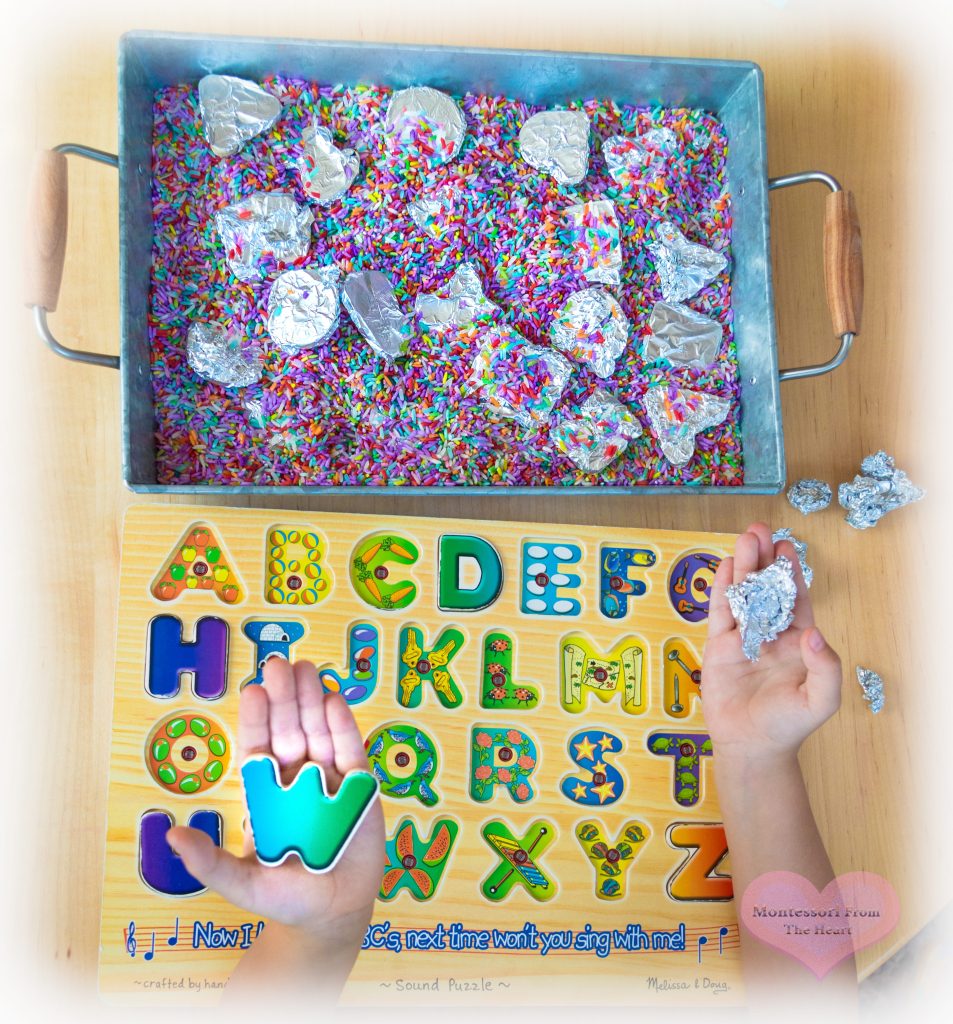
Alternatively, use aluminum foil to wrap each alphabet letter, place them in dyed rice, and offer a child the opportunity to seek and find unwrapped letters and match them to their corresponding slots on a puzzle frame.
Have you tried making DIY-dyed rainbow rice? Leave a comment if you did!
New On The Blog
Read here, Juggling Activities with Multiple Kids, and get a Guide.

Need Sensory Play Ideas for Multiple Kids?
Sensory activities are great for all ages, and I have created an eBook with time-tested recipes! Grab this FREE eBook on Sensory Play Ideas to transform your house from a chaotic zoo into a harmonious haven of fun!

RECENT BLOG POSTS

Mackenzie-Childs Easter Decor Ideas | Charming Spring Home Inspiration
Mackenzie-Childs Easter decor ideas bring cheerful spring charm to your home and inspire a warm, welcoming Easter space for family gatherings.

Spring Montessori Activities for Preschoolers | Simple Hands-On Learning at Home
Spring Montessori Activities for Preschoolers bring calm, hands-on learning into your home, so your child explores nature, builds skills, and grows in confidence.

Easter Activities Round Up for Preschoolers at Home | Simple Hands-On Learning
Easter Activities Round Up for Preschoolers at Home bring simple hands-on learning that builds fine motor skills, early math, and calm focused play for little learners.


