

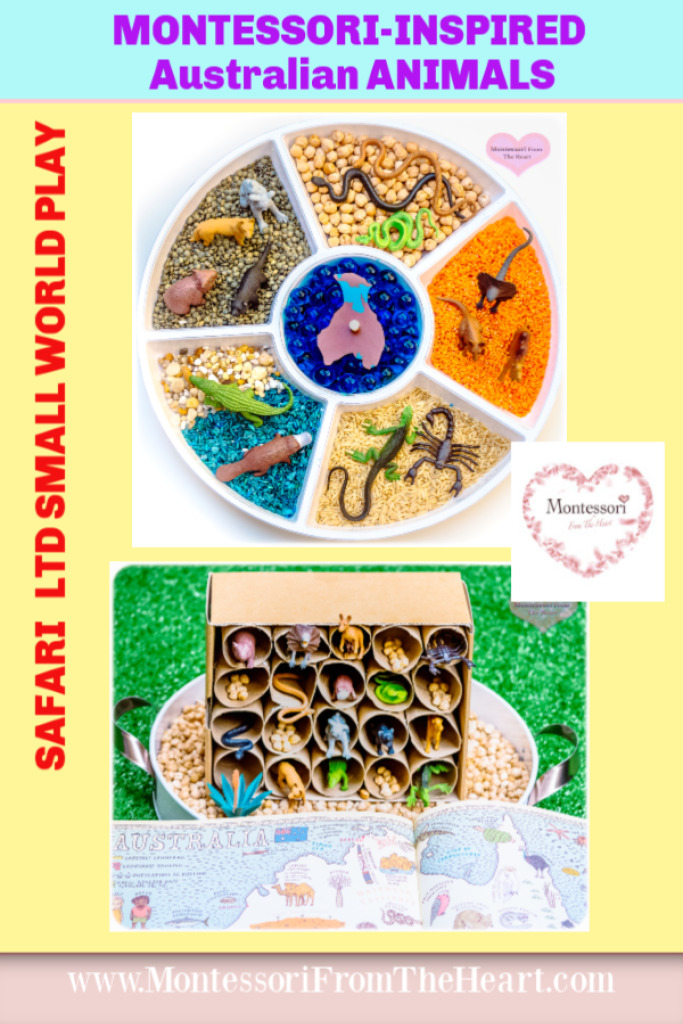
Safari LTD Australian Animals small-world sensory bins and play activities for kids are a fantastic way to help preschoolers and kindergartners develop fine motor skills, enhance cognitive growth, encourage creativity, and improve sensory processing through hands-on play.
Themed Australia Animals Sensory Bins are a creative and eco-friendly way to spark your child’s curiosity while reusing what you already have. These sensory invitations to play aren’t just about fun—they’re a powerful tool for brain development! Manipulating textures and fillers activates a child’s senses, firing neurons and promoting neuroplasticity, the brain’s ability to form new connections and strengthen learning pathways. As Dr. Montessori famously said, “What the hand does, the mind remembers.” With Montessori-inspired SafariLTD Australian Animals small-world play, your child can explore, touch, and manipulate kangaroos, koalas, and more—boosting cognitive growth with every playful movement.
In this blog post, I’ll share two fun, recycled DIY activities to bring the magic of Australian wildlife into your home. First, we’ll craft a TPR Australian Animals Hotel using recycled toilet paper rolls, transforming them into cozy homes for our animal figurines. Then, I’ll show you how to create an Australian Animals Habitat Tray using a simple compartment snack tray! From building a leafy “eucalyptus tree” for koalas to designing a sandy “outback” for kangaroos and emus, these activities combine sensory play, fine motor skill development, and imaginative pretend play—all while teaching kids about Australia’s unique ecosystems. Plus, they’re easy to clean up and a great way to keep playtime eco-friendly, fun, and endlessly engaging!
Discover Australia’s Wildlife Through Sensory Bin Play
Sensory bins and trays are a perfect way to bring the wonders of Australia to life for preschool-age toddlers. Imagine your little one digging through a sensory base of soft, earthy sand or vibrant green rice, discovering tiny kangaroo figurines and colorful koalas tucked between loose parts like eucalyptus leaves, pebbles, and shells. This activity not only sparks imagination and pretend play but also supports fine motor movement as those tiny hands carefully scoop, pour, and sort.
With sensory kits like these, the endless possibilities for creativity and learning are within arm’s reach. From hopping kangaroos to slithering snakes, the small parts in these sensory boxes inspire curiosity about Australia’s unique animals while improving fine motor skills. But remember—adult supervision is key when working with small parts to keep things safe and fun. So, grab a bin, let your child explore, and watch as they delight in an interactive journey across the Land Down Under!
Recycled TPR Australian Animals Hotel DIY Craft

You’re all about repurposing and reusing! Creating a cozy “hotel” for your Australian animal friends from recycled toilet paper rolls is not only incredibly fun but also wonderfully productive. Recycled DIY sensory play and crafts offer a meaningful way to spark creativity while teaching your child about sustainability. Most importantly, these activities help raise awareness about our human footprint, encouraging your little one to reduce their use and enjoy reusing what you already have!
Materials & Supplies
Below is the list of materials you will need for this Recycled DIY:
- A recycled shoebox
- 20 recycled toilet paper rolls (TPR)
- A hot glue gun
- Australia animal figurines
- Optional: MAPs book
Instructions
How to make this TPR Australian Animals Hotel DIY Craft
First, gather your recycled toilet paper rolls (TPRs) and hot glue them securely together inside a shoebox.
For added stability, consider gluing the perimeter rolls directly to the shoebox.
Once your DIY TPR hotel is ready, assign each Australian animal figurine its own “room.”
Bring the Australian Outback to Life in Your DIY Animal Hotel
To recreate Australia’s iconic desert environment, fill the hotel with dried chickpeas to represent sand and dunes. As you play, talk with your child about the different habitats these animals live in, naming each one and pointing out its unique characteristics. For added learning, we’re using the Maps book as a reference—it’s an incredible resource to deepen your child’s understanding of geography and wildlife!
This fun and eco-friendly activity is a great way for kids to learn about Australia’s unique animals and habitats while engaging in imaginative play. Using recycled materials like toilet paper rolls, children can explore geography, wildlife, and sustainability all in one hands-on experience!
Australian Animals Habitat Play Tray using a simple compartment snack tray

Another fun way to explore animals and their respective habitats is by creating a small world invitation to play. So, here, we are using a serving plate kitchen hack while exploring Australian animals w
Materials & Supplies
Below is the list of materials you will need for this Small-World Play Tray:
- a tray or a bin (we are using a snack tray)
- For the filler, I’m using expired grains from my cupboard—perfect for giving them a second life in play!
- Australia animal figurines
Instructions
How to make this Animals Habitat Play Tray
First, decide on the habitats you’d like to create. I used expired grains from my kitchen—like green lentils, dried chickpeas, and rice—that are no longer suitable for consumption. (I’m always hesitant to use fresh food for play.)
For example, you can mimic a desert environment with rice or chickpeas, create Australian plateaus with red lentils, etc. To add variety, I included pebbles from the beach to represent a shoreline for the platypus, along with blue-dyed rice to simulate water.
Interactive Play: Bringing Australian Habitats to Life
Once your habitats are ready, invite your child to explore and play! They can sort the animals into their respective environments—placing kangaroos in the “desert,” platypuses by the “shoreline,” and koalas near the “eucalyptus trees.” Encourage them to move the animals, act out stories, or create scenarios. For example, they might have a kangaroo hop across the “dunes” or a platypus swim through the “water.” This type of imaginative play not only strengthens fine motor skills but also sparks creativity and storytelling, making the activity both educational and fun!
What is Sensorial Work?
Sensorial work is designed to help children acquire clear and conscious information about the world, enabling them to classify and understand their environment. Dr. Maria Montessori emphasized that sensorial experiences begin at birth. Through their senses, children explore, study, and gradually make sense of the world around them.
As Montessori beautifully put it,
“We discovered that education is not something which the teacher does, but that it is a natural process which develops spontaneously in the human being. It is not acquired by listening to words but in virtue of experiences in which the child acts on his environment.”
The teacher’s role is not merely to instruct but to prepare an environment that encourages independence and cultural and sensory exploration. As a result, a child naturally learns through hands-on and active engagement.
Safari LTD TOOBs Animal Fogirines

With the highest regard, this is a sponsored post with Safari Ltd. All opinions are my own and from the heart! Besides, I am so excited to collaborate with this amazing team that brings Toys That Teach to our children!
Please always supervise your children.
Want more?
If you liked these Montessori SafariLTD Australian Animals Small World invitations, see HERE Bee Lifecycle Sensory Bin. Also, see HERE Insects Black Bean Sensory Play.
Learning About Emotions with Kids Free Printable ~ click here.

What are the 9 Play Schemas | Free Guide ~ here.

RECENT BLOG POSTS

Mackenzie-Childs Easter Decor Ideas | Charming Spring Home Inspiration
Mackenzie-Childs Easter decor ideas bring cheerful spring charm to your home and inspire a warm, welcoming Easter space for family gatherings.

Spring Montessori Activities for Preschoolers | Simple Hands-On Learning at Home
Spring Montessori Activities for Preschoolers bring calm, hands-on learning into your home, so your child explores nature, builds skills, and grows in confidence.

Easter Activities Round Up for Preschoolers at Home | Simple Hands-On Learning
Easter Activities Round Up for Preschoolers at Home bring simple hands-on learning that builds fine motor skills, early math, and calm focused play for little learners.
Disclosure: As an affiliate, I may earn a commission or credit should you choose to purchase something, but there is no additional cost to you. I only share products and programs that I use and love!


